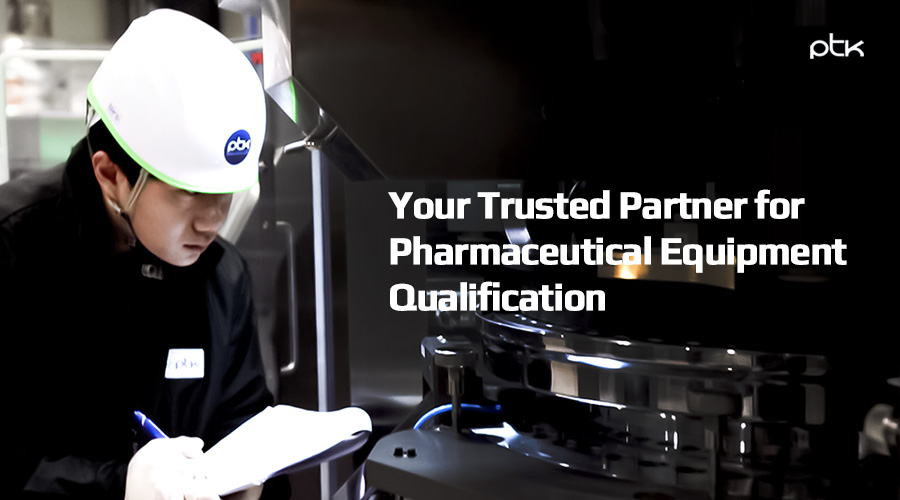
Your Trusted Partner for Pharmaceutical Equipment Qualification - PTK QA
QA: The Core of Pharmaceutical Manufacturing
In the pharmaceutical industry, qualification and validation are far more than a simple checklist. It is a core element of the manufacturing process, directly responsible for GMP compliance, data integrity, and operator safety.
PTK’s QA organization provides thorough and systematic qualification across the entire equipment lifecycle—from the initial design stage, through installation and operation at the customer’s site, and throughout long-term stable use.
Equipment qualification and validation, as we see it, is not about merely determining pass or fail. It is about confirming that equipment operates with predictable performance, maintains consistent product quality, and runs reliably without interruption in real production environments.
Only accurate and reliable qualification can ensure the maintenance of such stability.
01. Before Manufacturing - A Comprehensive Approach Starting from the Design Stage
“A perfect finish begins with perfect preparation.”
- F&DS (Function & Design Specification): The Functional and Design Specification establishes a comprehensive technical and functional foundation for the equipment by systematically converting customer URS into detailed, traceable functional, operational, and performance requirements that define how the equipment is designed, built, and intended to operate.
- RA (Risk Assessment): Risk Assessment is an integrated, lifecycle-based activity that identifies, analyzes, and controls potential risks that may affect product quality, patient safety, data integrity, or regulatory compliance, ensuring that risk mitigation measures are embedded into both equipment design and manufacturing processes.
- DQ (Design Qualification): Design Qualification is the documented and risk-based verification that the approved equipment design, as defined in the F&DS, is appropriate for its intended use and complies with applicable GMP and regulatory requirements prior to the start of manufacturing.
This QA process ensures clear and traceable documentation of customer requirements, thereby minimizing the risk of misunderstandings or disputes arising from undocumented or unapproved expectations.
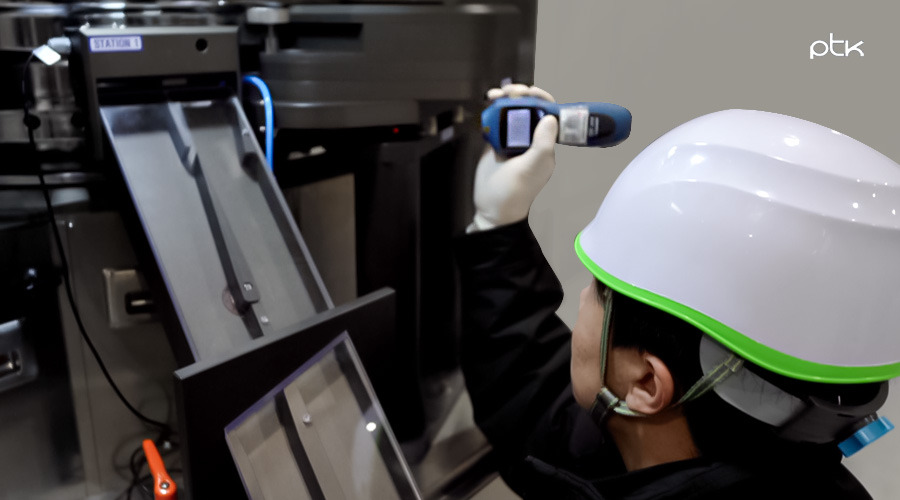
Eliminating operational risks at the factory before delivery.
02. At the PTK Factory – A FAT Strategy Aligned with Customer Needs
Factory Acceptance Test (FAT) is executed as a QA-led verification activity, ensuring that the equipment operates exactly as defined in the approved design and qualification strategy prior to shipment.
Depending on customer schedules and project constraints, FAT is conducted in one of the following formats:
Option 1. On-site FAT at the PTK Factory: Joint execution with customer representatives, enabling in-depth verification, immediate clarification of deviations, and real-time alignment through direct technical discussion.
Option 2. Complete/Online FAT: FAT is fully performed at PTK without requiring customer travel. All test activities are supported by structured photo and video evidence, along with comprehensive FAT reports covering each test item.
Common Strength: At PTK, equipment designers and QA specialists operate as a single, integrated team. This structure ensures that design intent is preserved without interpretation gaps, and that FAT is not limited to a basic functional check, but serves as a formal confirmation that the equipment behaves precisely as defined, minimizing the risk of unexpected downtime after installation.
03. After Installation – Direct On-site Verification by QA Specialists
SAT | IQ | OQ | CSV
Following installation at the customer’s site, PTK QA specialists conduct structured on-site qualification activities to reconfirm equipment performance under actual operating conditions. FAT-equivalent test logic is re-executed and optimized for the installed environment.
SAT (Site Acceptance Test): Reconfirmation of performance equivalent to FAT results.
IQ (Installation Qualification): Verification that installation, utilities, piping, wiring, and power supply comply with approved specifications.
OQ (Operational Qualification): Verification that the equipment operates reliably and reproducibly within predefined operating ranges under actual operating conditions.
CSV: Validation of HMI, PLC, and system-related functions to ensure functional integrity, system security, and compliance with ALCOA+ and applicable Data Integrity (DI) elements, including verification of audit trail functionality, user access control, authority management, and data protection mechanisms.
04. Customer – Specific Documentation Package
PTK qualification documentation is developed as audit-ready GMP evidence, designed to be seamlessly incorporated into the customer’s existing quality system without rework or reinterpretation.
- - Full alignment with customer-specific document formats, numbering conventions, and approval workflows
- - Application of customer branding elements, such as logos, to ensure documentation is indistinguishable from internal GMP records.
- - Bilingual documentation (Korean / English) to support global regulatory submissions and inspections
- - Objective, traceable evidence supported by photographs, system data, and executed test records
05. Lifecycle Partnership & The PTK Difference
PTK QA extends beyond initial qualification activities. Our QA organization maintains responsibility throughout the entire equipment lifecycle, ensuring sustained compliance and operational stability.
- - Re-qualification support and calibration services for critical instruments throughout equipment aging
- - Responsibility: Qualification is managed as a core quality responsibility, not a procedural formality
- - Technical Synergy: Equipment designers and QA specialists operate as a unified team, preserving design intent from qualification through validation
- - Full-Package: A comprehensive qualification and CSV framework, from Design Qualification through long-term system validation
Across all equipment types and qualification stages, PTK QA is defined by consistency, accountability, and technical integrity.
PTK QA serves as a long-term quality partner for pharmaceutical equipment projects, ensuring that qualification and validation activities consistently support reliable operations, regulatory compliance, and patient safety.